


How to Prepare Your Pet for TPLO Surgery?

Preparing a pet for TPLO surgery can be a daunting task for many pet owners. Dr. Laura McNally, a renowned veterinarian specializing in orthopedic surgery, emphasizes, “Proper preparation makes all the difference in recovery.” Understanding the process and planning ahead can ease anxiety for both pets and owners.

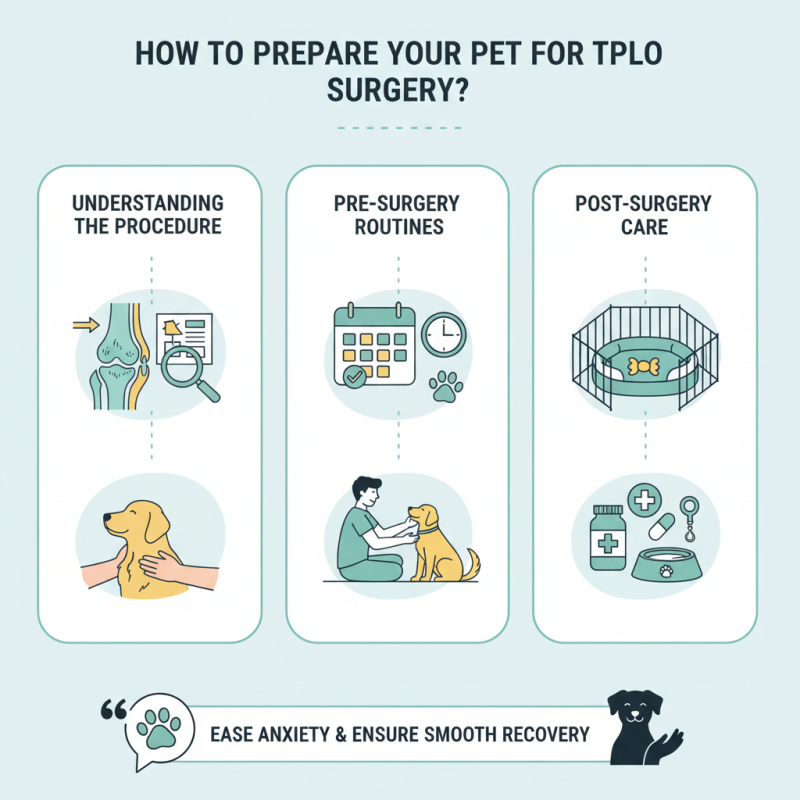
To start, familiarize yourself with what TPLO surgery entails. This procedure aims to stabilize a torn cranial cruciate ligament in dogs. Knowing what to expect helps reduce stress. Include your pet in pre-surgery routines to ease their transition. This familiarity can be comforting.

It's also crucial to consider post-surgery care. Dr. McNally notes, “Recovery is as important as the surgery itself.” Prepare your home by creating a quiet space where your pet can rest. Gather necessary supplies like medications and a safe place for them to move around. Reflect on these details; they significantly impact your pet's recovery journey.

How to Prepare Your Pet for TPLO Surgery?

Understanding TPLO Surgery: What It Involves for Your Pet

TPLO surgery, or tibial plateau leveling osteotomy, is a common procedure for dogs with knee injuries. This surgery aims to stabilize the knee joint after an injury to the cranial cruciate ligament. During the surgery, the angle of the tibial plateau is changed. This change helps prevent abnormal movement in the knee. Dogs often recover well from TPLO surgery, but they require proper care afterward.

Before the surgery, it’s essential to prepare your pet. Ensure they have a comfortable recovery area. Limit their movement to prevent strain on the knee. Follow your vet’s advice on pre-surgery care. It may be tough to keep your pet calm. You might notice them anxiously pacing around. Monitor their behavior closely; this can help in adjusting your preparations.

Post-surgery, your pet will likely need assistance. Use a sling when walking them, especially during the early recovery phase. Watch for signs of discomfort, like whining or reluctance to move. It’s okay to feel anxious about the process. Each pet reacts differently. Patience and gentle encouragement will be key. Keeping a close eye on them helps prevent complications, ensuring a smooth path to recovery.

Pet Recovery Timeline After TPLO Surgery

This bar chart illustrates the expected activity level recovery timeline for pets following TPLO surgery. The chart indicates gradual improvements from 20% in the first week to full activity by the sixth week.

Preoperative Assessment: Key Factors to Evaluate Before Surgery

Before your pet undergoes TPLO (Tibial Plateau Leveling Osteotomy) surgery, thorough preoperative assessment is crucial. Start with a comprehensive physical examination. This helps to determine your pet's overall health and identifies any hidden issues. Blood tests are particularly important. According to the American Animal Hospital Association, nearly 30% of pets show abnormalities in routine blood work. These can signal underlying conditions that may complicate surgery.

Evaluate your pet's weight as well. Obesity can increase surgical risks and prolong recovery. Research indicates that overweight pets face a 20% higher complication rate. Consider discussing a weight management plan with your veterinarian. Also, preoperative imaging, like X-rays, will help assess the extent of damage. This information assists in tailoring the surgical approach. Ensure your veterinarian explains the imaging results clearly, as misconceptions can lead to unpreparedness.

Don't forget to consider your pet's temperament. The stress of surgery can be overwhelming. Some pets may require anxiolytics before the procedure. Even minor behavioral issues can complicate post-operative care. Reflect on your pet's past experiences with stress or anxiety. Reach out to your vet about effective strategies for easing your pet's fears.

Preparing Your Home for Post-Operative Care After TPLO

Preparing your home for your pet's recovery after TPLO surgery is crucial. Start by creating a comfortable space. Choose a quiet corner of your home. Add soft bedding and blankets. This area should be free from disturbances.

Remove any obstacles that could pose a risk. Keep furniture away from your pet’s pathways. You might need to rearrange to accommodate their limited mobility. Baby gates can help control access to stairs. It is essential that your pet doesn't attempt to jump.

Have all necessary supplies within reach. Stock up on medications, food, and water. Consider using a feeding dish that's easy to access. You may need to assist with eating and hydration. Your pet will likely be confused or anxious. Frequent soothing and encouragement will help. Prepare to adapt and respond to their needs as they arise.

Pain Management Strategies for Pets Recovering from TPLO

How to Prepare Your Pet for TPLO Surgery?

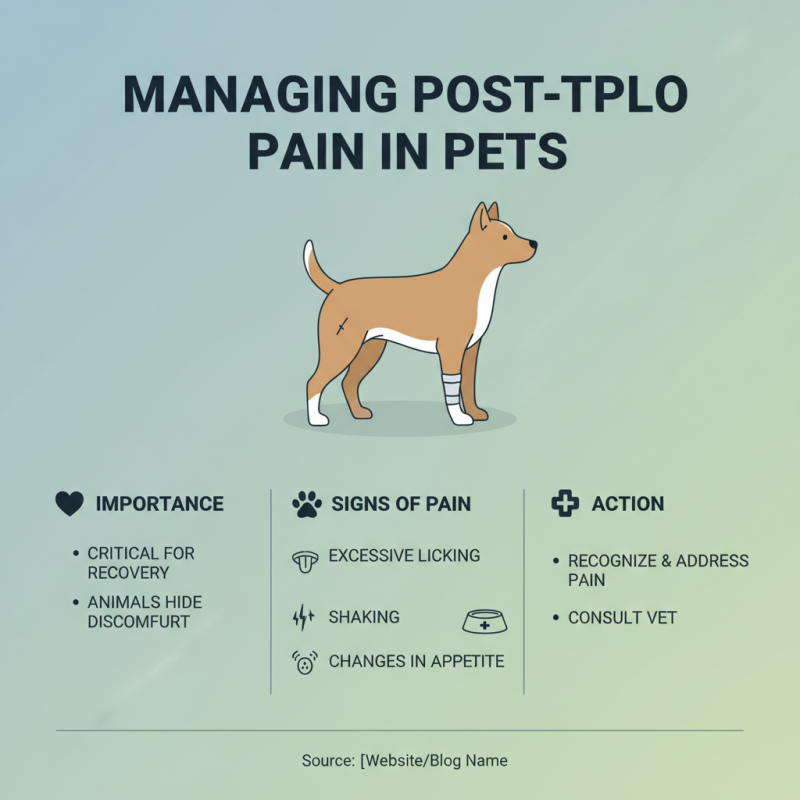
Managing pain for pets after TPLO surgery is critical for their recovery. Understanding pain levels can be challenging. Animals often hide discomfort. Look for signs such as excessive licking, shaking, or changes in appetite. These signs may indicate pain that needs addressing.

Medication prescribed by the vet can help. Doses should be given on time. Follow instructions closely. In addition to medication, cold packs can soothe painful areas. Always wrap ice in a cloth to prevent skin damage. Short, controlled walks may promote healing while avoiding stress on the joint.

Comfort is vital during recovery. Create a quiet space for your pet. Soft bedding can make them feel safe. Keep their favorite toys nearby. Frequent gentle petting can provide reassurance. Your pet may need time to adjust. Patience is key. It's a journey, and every day matters.

Rehabilitation and Recovery Timeline Following TPLO Surgery

After TPLO surgery, proper rehabilitation is crucial for your pet's recovery. The healing timeline varies. Initial rest is vital for the first few weeks. Limit your pet's movement to avoid strain. Walks should be short and supervised. Gradually increase the duration as recommended by your veterinarian.


Tips: Begin physical therapy early. Gentle range-of-motion exercises help maintain flexibility. You can also use ice packs to reduce swelling. Always consult your vet before introducing any new activities.


Over time, you may notice your pet's enthusiasm returning. However, they might still show hesitance during movement. This is normal. Monitor their behavior closely. Any sign of discomfort should trigger a vet visit. Follow the prescribed rehabilitation plan closely. It’s essential for a full recovery. Stay patient and observant; healing takes time.