

How to Choose the Right Animal Hospital for Your Pet?

Choosing the right animal hospital is crucial for your pet's well-being. A good hospital can provide excellent care, while a poor choice can lead to stress and harm. You want a place where your furry friend feels safe and comfortable.

When looking for an animal hospital, consider the services offered. Does it provide emergency care? Are there specialists available? Visit the facility and observe the cleanliness. A well-maintained hospital reflects a commitment to quality care. Talk to the staff; their attitude can reveal a lot about the overall environment.

Also, think about your pet’s needs. Some clinics specialize in certain animals or diseases. Make sure their expertise aligns with your pet's health requirements. Gathering feedback from other pet owners can help too. Remember, this decision isn’t just about convenience; it’s about your pet’s health and happiness. Don’t rush into it; take your time.

How to Choose the Right Animal Hospital for Your Pet?

Researching Local Animal Hospitals: Key Factors to Consider

Finding the right animal hospital for your pet can be overwhelming. Researching local options is essential. Start by asking friends and family for recommendations. Personal experiences can provide valuable insights into the quality of care. Make a list of potential hospitals to visit.

Consider the hospital’s location. Proximity is crucial for emergencies. A nearby facility can save valuable minutes when your pet needs immediate help. Check the services offered. Some hospitals specialize in specific animals or conditions, while others provide a broader range of care.

Visit the hospitals on your list. Pay attention to cleanliness and organization. Notice how staff interacts with pets and their owners. Are they friendly and knowledgeable? The right environment makes a difference. Reflect on any concerns you notice during your visits. Don’t hesitate to ask questions. A good hospital will welcome inquiries and provide clarity.

Evaluating the Qualifications and Experience of Veterinary Staff

Choosing the right animal hospital starts with evaluating the veterinary staff. You want to know their qualifications. Are they licensed? Credentials matter. Look for advanced education in veterinary medicine. Years of experience can indicate expertise, but don’t overlook recent graduates. They often bring fresh knowledge and enthusiasm.

Tips: Ask about their specialties. Are they familiar with your pet's specific needs? A vet experienced in your pet's breed or health issues can provide better care.

Pay attention to their communication skills. Do they explain things clearly? A good veterinarian should listen to your concerns. If they seem rushed, it may be a red flag. Compassion is essential in veterinary care.

Tips: Observe the environment. A clean, organized facility reflects professionalism. However, an overly sterile environment may sometimes feel less inviting. Trust your gut. If something feels off, consider looking elsewhere. A good fit is crucial for your pet's health and comfort.

Evaluation of Veterinary Staff Qualifications and Experience

Assessing Hospital Facilities and Available Services for Your Pet

Choosing the right animal hospital involves careful assessment of facilities and services. For instance, a well-equipped facility should have modern diagnostic tools. According to the American Animal Hospital Association, about 15% of veterinary visits result in referrals due to inadequate technology. This highlights the importance of a hospital’s capabilities.

Look for essential services like emergency care, diagnostic imaging, and surgery. A study from the American Veterinary Medical Association states that about 70% of pet owners seek urgent care at facilities without proper resources. This can lead to unnecessary delays in treatment.

Pay attention to cleanliness and staff professionalism as well. A clean environment reflects a hospital's commitment to health and safety. Veterinary facilities that prioritize hygiene can decrease infection rates significantly. Nevertheless, some places struggle with maintaining these standards consistently. Research shows that about 30% of pet owners are dissatisfied with cleanliness in their chosen hospitals. Being proactive can save your pet’s life.

Reading Reviews and Getting Recommendations from Other Pet Owners

How to Choose the Right Animal Hospital for Your Pet?

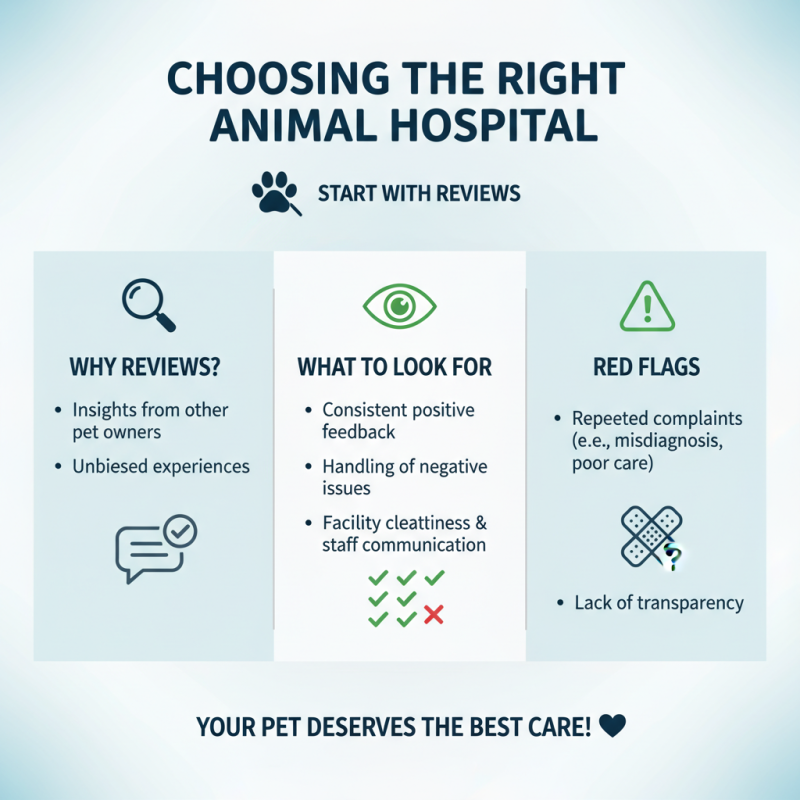
Choosing the right animal hospital is crucial for pet owners. One effective way to start is by reading reviews. Many websites and forums provide insights from other pet owners. Look for patterns in the comments. A few negative reviews can be overlooked, but consistent issues raise red flags.

Ask fellow pet owners for recommendations. They can share personal experiences that are often more reliable than online reviews. When friends or family suggest a clinic, consider their reasons. Did they receive great service? Were the staff friendly? These factors matter when making your choice.

Tips: Pay attention to the tone of reviews. A compassionate tone signifies a caring environment. Additionally, consider visiting potential animal hospitals in person. Observe how staff interacts with pets and owners. Sometimes, first impressions reveal a lot. Lastly, trust your instincts. A place may look fancy, but if it feels off, it might not be the best fit for your furry friend.

Understanding the Costs and Payment Options at the Animal Hospital

When selecting an animal hospital, understanding costs and payment options is essential. Veterinary services can range greatly in price, depending on the procedure or treatment needed. Routine check-ups may be relatively affordable, but emergency care can lead to unexpected expenses. Many pet owners are caught off guard by these potential costs, which is why upfront discussions are crucial.


It's wise to ask about payment plans offered by the hospital. Some facilities allow clients to pay in installments, making it easier to manage larger bills. Others may accept pet insurance, which can reduce out-of-pocket expenses significantly. Still, not all plans cover every service, leading to confusion. A thorough review of your policy may reveal gaps that could surprise you later.


Consider inquiring about available financial aid options. Some organizations provide assistance to low-income pet owners. However, these resources may have limited availability, and not everyone qualifies. This uncertainty can be challenging. Always be prepared for the possibility of unexpected costs, and budget accordingly. Having a conversation with your chosen veterinary team about financial expectations will ensure that you and your pet receive the best care possible.